
Best Time to Visit Bali: Weather, Crowds and a Month-by-Month Guide

The best time to visit Bali depends on what you want from your trip. Use the monthly weather pattern alongside your route, school holidays and preferred activities. A beach stay on the south coast and an inland stay around Ubud need not have the same conditions.
Bali is warm throughout the year, but conditions vary between the coast and the higher ground around Ubud and the mountains. Rainfall and sunshine also change from year to year, so treat the seasons as a guide, not a guarantee.
In this guide
- Quick answer: when should you go?
- Bali’s dry and rainy seasons
- Bali month by month
- Best time for beaches, surfing and sightseeing
- Crowds and booking tips
- What to do when it rains
- What to pack
- Frequently asked questions
Quick answer: when should you go?
- For a first trip: May, June or September are good months to consider for a mix of outdoor activities and generally drier conditions.
- For a beach-focused holiday: The dry season, roughly April to October, gives you a better chance of suitable weather. Always check local sea conditions.
- For fewer crowds: Consider the shoulder months around April, May, September and October, while checking school holidays and local events.
- For flexible budgets: Compare dates outside major holidays. Prices vary by property and availability, so lower prices are not guaranteed.
Once you have dates in mind, use our 10-day Bali itinerary to plan a route and our guide to where to stay in Bali to choose your base.
Bali’s dry and rainy seasons

Bali generally has a dry season from April to October and a rainy season from November to March, according to Indonesia’s official tourism information. Transitions are gradual: a dry-season trip can include rain, and the rainy season can bring clear periods.
The south coast and inland uplands do not always feel the same. Ubud and mountain areas can be cooler and wetter than the coast, especially at higher elevations. Check the local forecast for each stop shortly before you travel.
Bali month by month
South-coast weather reference: The Japan Meteorological Agency’s monthly normals for Denpasar/Ngurah Rai provide the rainfall figures below. They describe one coastal station, not Ubud or Bali’s mountains, and are climate averages rather than a forecast for your trip.
January
Denpasar/Ngurah Rai normal rainfall: 350.7 mm. Usually within the rainy season. Expect the possibility of frequent showers and humid conditions. Keep outdoor plans flexible and allow extra time for road travel.
February
Denpasar/Ngurah Rai normal rainfall: 289.8 mm. Still generally wet. Beach time remains possible between showers, but visibility and sea conditions can vary. Consider a mix of indoor activities and short outdoor outings.
March
Denpasar/Ngurah Rai normal rainfall: 231.1 mm. Often a transition toward drier weather, though rain remains possible. Check the date of Nyepi, Bali’s Day of Silence, and confirm how its restrictions affect flights and your accommodation.
April
Denpasar/Ngurah Rai normal rainfall: 107.4 mm. The dry season typically begins around this time, but showers can continue. A useful month for combining beaches with Ubud before the main summer holiday period.
May
Denpasar/Ngurah Rai normal rainfall: 94.7 mm. Generally a good choice for outdoor sightseeing and beach days, with the caveat that weather varies. Book popular activities ahead if your dates fall on holidays.
June
Denpasar/Ngurah Rai normal rainfall: 67.9 mm. Typically dry and well suited to exploring different parts of the island. Summer travel demand can start to rise, so compare accommodation options early.
July
Denpasar/Ngurah Rai normal rainfall: 27.6 mm. A popular dry-season month, especially during school holidays. Plan for busier attractions and reserve your preferred accommodation and activities in advance.
August
Denpasar/Ngurah Rai normal rainfall: 36.4 mm. Another popular month for beach trips and sightseeing. Expect competition for well-located stays and start early for popular stops.
September
Denpasar/Ngurah Rai normal rainfall: 59.4 mm. Usually still within the dry season. It can be a good choice after some summer holidays end, though popular places remain busy.
October
Denpasar/Ngurah Rai normal rainfall: 64.4 mm. Often a transition month as the wet season approaches. Conditions can change, so keep an alternative plan for days with rain.
November
Denpasar/Ngurah Rai normal rainfall: 131.2 mm. Rain generally becomes more common. Flexible itineraries and accommodation with comfortable indoor spaces can make a difference.
December
Denpasar/Ngurah Rai normal rainfall: 327.4 mm. Usually rainy, with travel demand rising around Christmas and New Year. Book ahead for festive dates and allow flexibility for weather and traffic.
Best time for beaches, surfing and sightseeing
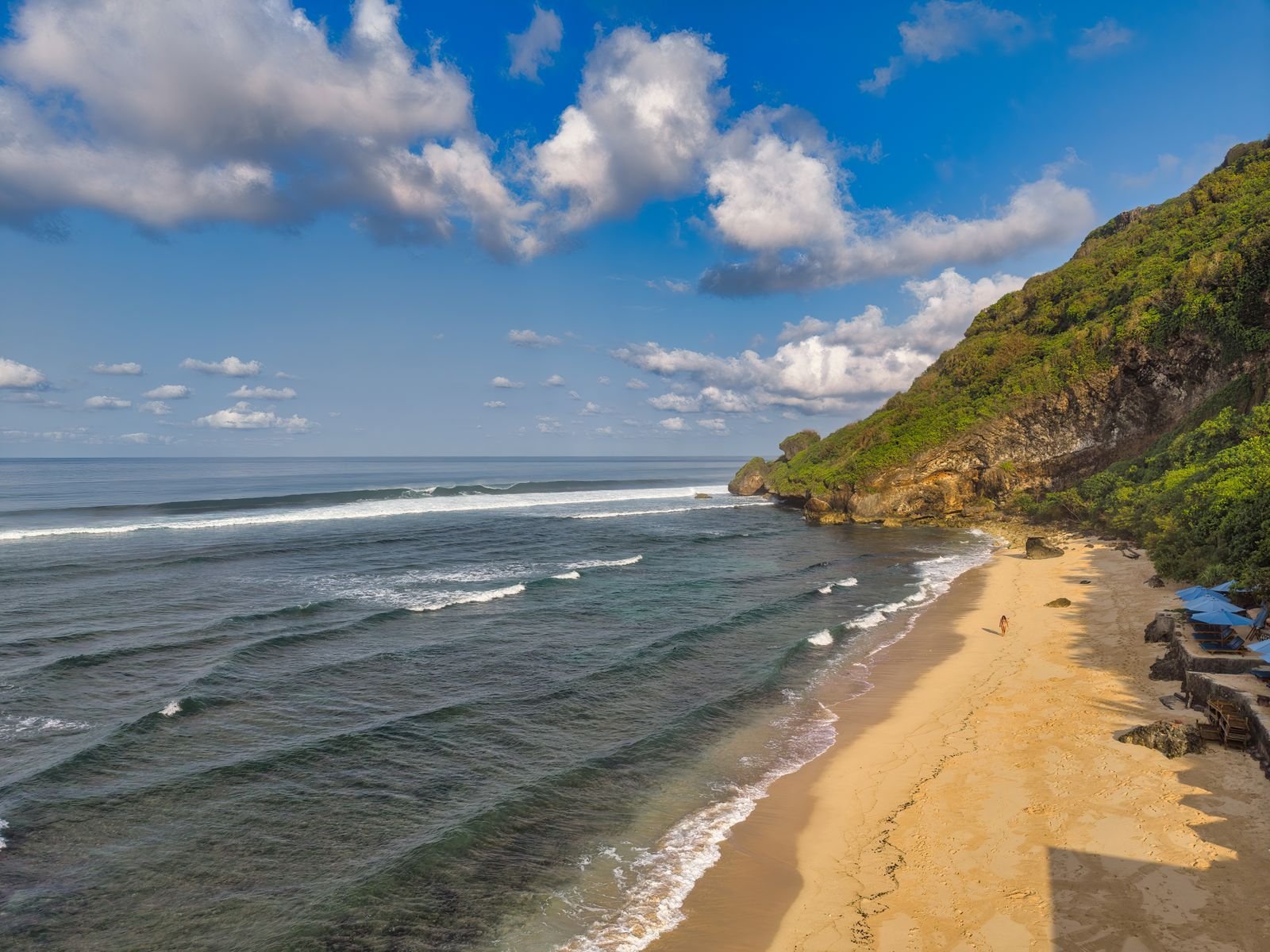
Beaches: The drier months are a practical starting point, especially if you want to visit several beaches. Conditions still differ by location and day. Our Bali beach guide helps you choose between swimming, scenery and surf.
Surfing: Bali has surf spots for different levels and seasons. The right beach depends on swell, wind and experience, not just the month. Ask a local surf school about current conditions and choose a beginner-friendly lesson if you are new.
Snorkeling: Visibility depends on the weather, sea conditions and location. Check with a reputable local operator shortly before booking, and avoid entering the water when conditions are unsafe.
Temples and inland sightseeing: The dry season makes outdoor days easier to plan, but early starts and a rain layer are useful at any time. Explore our guides to Ubud and Uluwatu for ideas.
Crowds and booking tips
July, August and the Christmas and New Year period often attract more visitors. School holidays, festivals and public holidays can also affect demand, so check the dates for your own trip rather than assuming a whole month will be quiet.
- Compare several nearby dates and locations before booking accommodation.
- Reserve your first-choice stay early for peak holiday periods; read the cancellation terms.
- Group nearby activities together to reduce time spent in traffic.
- Leave a spare day or a flexible morning for weather-sensitive activities.
What to do when it rains
Rain does not have to cancel your trip. Consider a cooking class, spa, café, museum or a relaxed meal, and move outdoor stops to a clearer part of the day. If a shower turns heavy, avoid flooded roads and follow local advice.
What to pack for Bali’s weather
Pack for warm, humid days, but be prepared for a shower and cooler temperatures in the highlands. A small day bag makes it easier to carry these essentials:
- Light, breathable clothes, sun protection and a reusable water bottle.
- A compact rain jacket or umbrella, especially during the rainy season and transition months.
- Comfortable footwear with grip for wet paths; bring sandals for beach days.
- A light layer for early starts or evenings in higher areas.
- A sarong or other suitable cover-up for temple visits; check each temple’s requirements.
Frequently asked questions
What is the best month to visit Bali?
There is no single best month for every route. Use the quick answer above to shortlist dates, then compare the monthly south-coast rainfall above with your activities and holiday calendar.
Is Bali worth visiting in the rainy season?
Yes, if you are comfortable with a flexible schedule. You may still find dry intervals, but allow for showers and possible changes to water activities or transport.
Is Bali hot all year?
Bali is generally warm year-round. Higher inland areas can feel cooler than the coast, especially in the evening or during rain.
When is the busiest time in Bali?
July and August, as well as Christmas and New Year, are often busy. Local holidays, school breaks and events can also affect particular destinations.
How many days should I spend in Bali?
A week can cover a few areas at a relaxed pace; ten days gives you more room to combine beaches and inland stops. Choose fewer bases if you want to spend less time on the road.
Ready to plan? Start with our 10-day Bali itinerary and choose your base with where to stay in Bali.